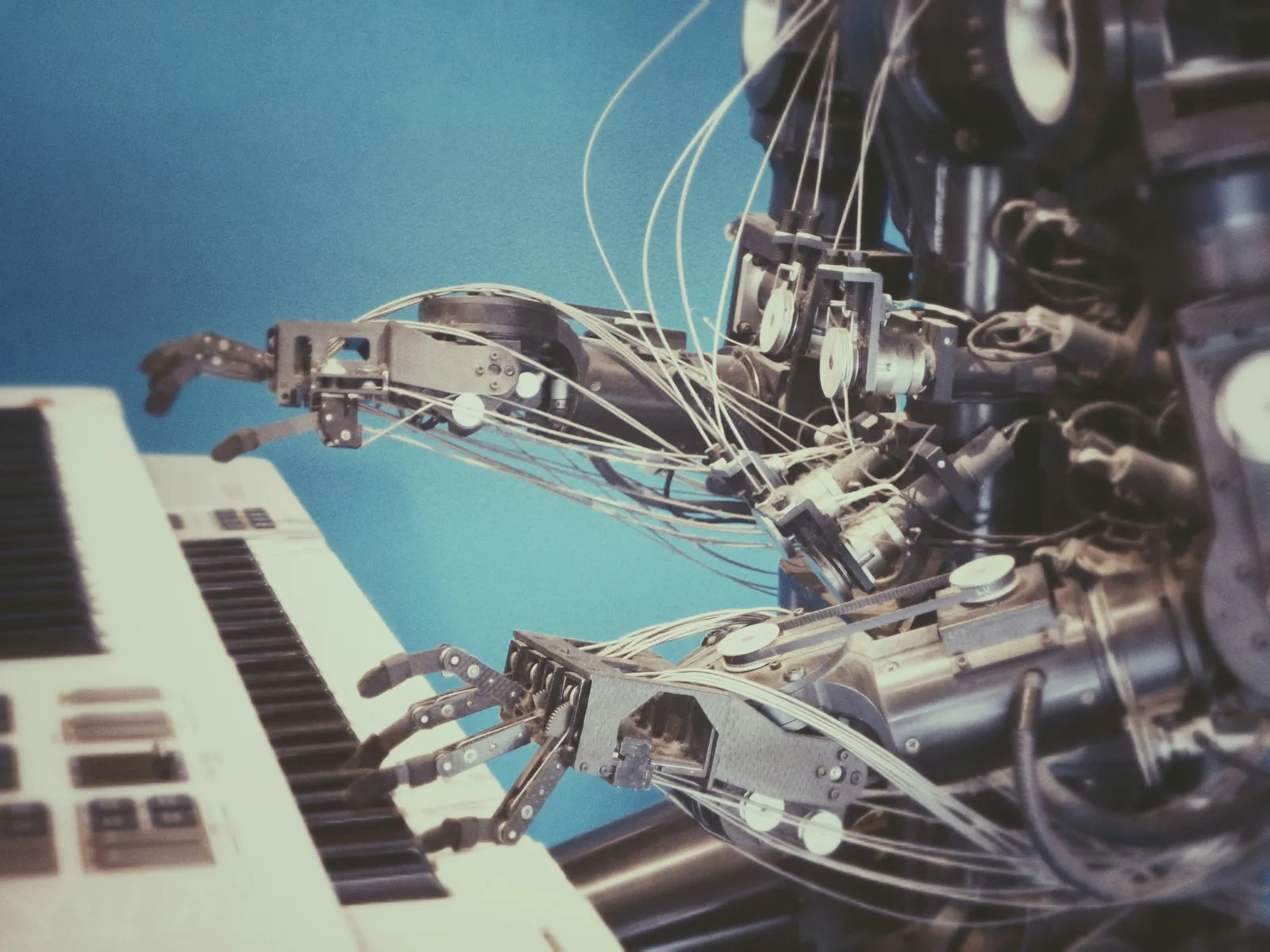
In April 2026, the global music streaming pipeline crossed a watershed line that changed the industry forever. Deep within the server logs of Paris headquartered streaming service Deezer, engineers observed a clean, unyielding digital trend line: fully artificial intelligence generated tracks had climbed to scale nearly 75,000 incoming files every single day. Synthetic music now commands a staggering 44% of all new recorded assets delivered to the service.
This is no longer a fringe phenomenon or an experimental playground for tech enthusiasts. It represents a massive, industrialized transformation of the music distribution grid. Millions of fully realized, text to audio musical tracks are flooding international servers every month. Yet, this wall of synthetic sound meets an unexpected market reality: while nearly half of all global uploads originate from an algorithmic prompt, human consumption of these pure AI files remains locked in a tight band between 1% and 3% of total global streams.
The music landscape has fractured into a strange duplication. On one side stands an explosive, automated supply chain driving down the transactional barriers of production to absolute zero. On the other side sits a human audience that remains deeply tied to legacy star systems, cultural narratives, and organic live performance.
Between these two forces lies a complex web of multibillion dollar copyright battles, systemic vulnerabilities, and an artistic reassessment that stretches from the corporate boardrooms of New York to streaming platforms worldwide.
Defining the Spectrum: From Assistive Stems to Generative Prompting
To accurately map the structural shift occurring across the recording arts, a firm line must be drawn between two fundamentally different tiers of technology: AI assisted production and fully generative AI compositions.
AI assisted technology functions as a highly precise extension of classical musicianship and sound engineering. This tier includes advanced algorithmic separation tools (such as the software used by director Peter Jackson to isolate John Lennon's vocal track for the final Beatles release, "Now and Then"), intelligent equalization, predictive pitch correction, and automated mastering suites. In these environments, human agency remains the primary source of creative direction. The machine behaves strictly as a sophisticated processing unit, polishing human performances, organizing acoustic layers, or repairing damaged multi-track recordings.
Conversely, fully generative AI tools operate on an inversion of the creative workflow. Platforms like Suno, Udio, Stability Audio, Meta's MusicGen, and Google's Lyria model do not require instrumental mastery, music theory knowledge, or acoustic inputs. Instead, they operate through deep autoregressive transformers trained on vast datasets of ingestion material. A user types a natural language prompt, such as "115 BPM electronic dance bassline with female vocal harmonies and clean digital synthesizers", and the model outputs a fully mixed, mastered, and lyricised audio file in under sixty seconds.
In this generative model, the human participant transitions from an active author or instrumentalist to an executive curator. The act of creation is replaced by a cycle of text prompt iteration and retrospective selection. This shift fundamentally challenges standard legal and philosophical definitions of authorship, intellectual ownership, and the value of human creative labor.
The Global Infrastructure by the Numbers
The raw scale of this automated influx has transformed the backend mechanics of digital music distribution. Data released from platform monitoring frameworks highlights an unprecedented acceleration in the volume of synthetic uploads over a very brief historical window.
Platform-disclosed daily fully AI uploads, not a cross-platform average
Source: Deezer Newsroom and Reuters, 2025 to 2026
In raw share terms, fully AI content went from roughly a tenth of daily deliveries to nearly half in sixteen months.
From about 10 percent to about 44 percent in sixteen months
Source: Deezer Newsroom, 2025 and 2026
However, the disconnect between asset volume and actual human engagement exposes a deeper structural issue within the streaming economy:
Nearly half of new files, a sliver of real listening
Source: Deezer Newsroom, April 2026
If nearly half of the incoming files generate only a fraction of organic listening activity, why does the volume continue to rise? The answer lies in a highly lucrative, automated vulnerability: programmatic streaming fraud.
Internal security audits across major digital service providers reveal that up to 85% of streaming plays directed at un-indexed, fully synthetic tracks are generated by bot networks designed to exploit the pro rata payment models of digital services. Bad actors use generative tools to effortlessly construct thousands of instrumental loops, upload them through bulk digital aggregators, and set up automated networks of simulated accounts to play those files on repeat. This structure systematically siphons micro-royalties out of the shared revenue pools, diluting the earnings of real human creators who rely on organic engagement.
Most detected AI listening is fraudulent and demonetised
Source: Deezer Newsroom, April 2026
Streaming services like Spotify and Apple Music have been forced to rethink monetization, increasingly demonetizing noise and pure AI ambient tracks to protect human royalties.
Market Saturation and the Global Charts
The geographic and generic footprint of generative music globally shows a clear preference for functional, pattern heavy, or loop centric audio categories. Ambient sleep soundscapes, lo fi study beats, programmatic electronic dance backings, and cinematic tension drones are the categories most heavily displaced by automated generation. Because these formats are primarily consumed as secondary background listening rather than active focal points, audiences rarely investigate the identities or human histories of the creators.
The world watched as synthetic anomalies went viral, most notably the unauthorized AI generated Drake and The Weeknd clone "Heart on My Sleeve" in 2023, which racked up millions of plays before being pulled down by Universal Music Group. Fast forward to 2025, and an AI country act briefly charted in the US, sparking an outcry among Nashville purists. The major streaming platforms have responded by reinforcing their defensive postures. Spotify, Apple Music, and Deezer have implemented strict algorithmic isolation protocols. Fully synthetic tracks are systematically excluded from official editorial playlists and deep recommendation algorithms to prevent automated content from overriding organic human talent.
The Ethics of Automation: Originality, Theft, and Cultural Extraction
The rise of generative models brings up serious ethical concerns regarding cultural exploitation, algorithmic fairness, and the extraction of artistic value. At the center of the dispute is the foundational method by which modern generative transformer engines are built.
Generative models cannot create from an empty slate. They require massive collections of preexisting audio to learn the underlying mathematical relationships of pitch, timber, rhythm, and genre.
Developers of these platforms have scraped decades of human recordings, encompassing millions of protected tracks, without obtaining prior consent, offering financial compensation, or providing attribution to the original creators. For many artists, this feels like institutionalized theft: their life's work is ingested to build a commercial system designed to undercut their market value.
This dynamic gives rise to the classic "prompt author" dilemma:
Is it fair for an individual with no musical training or historical connection to a genre to input a single sentence into a web interface, claim complete ownership over the resulting complex composition, and place their name on it as an artist?
Within traditional creative circles, this practice is seen as an extreme degradation of the artistic process. True musicianship combines emotional intent, physical mastery, and active participation in a living cultural dialogue. Oversimplifying this journey into an automated text interaction cheapens the artistic output, treating music as a disposable, highly optimized commodity.
Algorithmic Inbreeding: The Reality of Model Collapse
Beyond the ethical and economic debates, generative music faces a harsh, unavoidable technical limitation that threatens its long-term viability: the structural phenomenon known as model collapse.
As synthetic music floods the internet, it inevitably pollutes the open datasets that future AI engines use for training data. When an autoregressive generative model is trained primarily on data manufactured by previous generations of artificial intelligence, it stops receiving the rich, messy, nonlinear inputs that characterize human performance and improvisation.
Mathematical variance and fidelity retention in recursive AI training loops
Source: Shumailov et al., Nature Computer Science Assessment, 2024
A foundational study published in Nature by researcher Ilia Shumailov and his peers established that recursive training loops (machines learning from machines) inevitably cause the underlying models to lose data diversity and experience structural collapse within 5 to 7 iterations.
In generative audio, this degradation shows up as a noticeable loss of clarity, repetitive structural forms, the flattening of emotional range, and the accumulation of metallic digital artifacts. The system strips away the micro timing imperfections, subtle pitch variances, and unexpected expressive choices that make human playing feel alive.
Without a continuous input of authentic, innovative human artistry, generative platforms eventually turn into an echo chamber, repeating increasingly hollow copies of past trends.
The Intellectual Property War: The Legal Precedents of 2026
The legal status of generative music has become a highly contested battleground in intellectual property law, split into two distinct models of corporate strategy and legal philosophy.
Current legal disposition of major industry stakeholders as of mid-2026
Source: US Federal Court Records Consolidated Status, 2026
In late 2025, the united front of major record labels broke apart, giving way to pragmatic deal making. Universal Music Group resolved its outstanding dispute with Udio, pivoting to codevelop a secure, licensed generative music platform built entirely on authorized, opt in artist catalogs with structured royalty payouts. Warner Music Group followed a similar path, settling its legal claims against Suno in exchange for a substantial financial payment and a strategic licensing partnership.
Conversely, Sony Music Entertainment has maintained a completely unyielding legal stance. It remains the final major label actively suing both Suno and Udio in US Federal Court, arguing that their historical training methods constitute massive copyright infringement. In May 2026, Sony and Universal significantly escalated the scale of the Suno litigation, expanding the formal list of infringed sound recordings to 61,026 files. Given that US statutory copyright law allows for damages up to $150,000 per willful infringement, the potential financial liability for Suno has skyrocketed to $9.1 billion.
Governments are also acting. The passing of the Tennessee ELVIS Act in 2024 set a precedent for protecting artists' voices and likenesses from deepfakes. Globally, the EU AI Act includes strict transparency requirements, forcing AI companies to disclose the copyrighted data they use for training. The US NO FAKES Act aims to create a federal right of publicity to protect human creators from unauthorized digital replicas.
The Future of Consumption and Human Relevance
As the industry learns to navigate this automated environment, the global music market is heading toward a clear division in consumer habits.
The industry is splitting into two distinct sectors: functional commodity sound and authentic human art.
For low stakes background audio, such as corporate video scores, gaming loops, sleep atmospheres, and hyper targeted advertising hooks, fully generative AI will likely become the standard production tool. This transition will permanently alter the economics of commercial sync licensing, creating a challenging financial environment for working producers who traditionally relied on these secondary revenue streams to fund their personal artistic projects.
Set that against the projected economics. CISAC and PMP Strategy estimated in 2024 that, under current conditions, generative AI could put roughly a quarter of music creators' revenues at risk by 2028.
Forecast under current conditions
Source: CISAC and PMP Strategy, 2024
Yet, for music that forms the backbone of human identity, subcultural style, and shared emotional experiences, human creators remain absolutely irreplaceable. The value of an artist does not lie merely in the sonic perfection of their final stereo master file; it lives in their vulnerability, their live performance energy, their physical presence, and the community that forms around their unique perspective.
A machine can analyze and replicate the chord progressions of a pop song, but it cannot experience the human conditions that gave those sounds meaning in the first place.
The future of music will not belong to a completely automated world, nor will it return to an entirely analog past. Instead, it will be defined by an intense, ongoing negotiation between human intent and automated capability. The tools of artificial intelligence will continue to expand across every studio on earth, but the heart of the music will remain tied to the human spirit. The survival of music as an art form relies on our ability to protect, value, and fairly compensate the human souls behind the microphone and the instrument.
But as the global industry wrestles with these existential questions, a quieter, perhaps more insidious revolution is happening in local markets. How is AI taking shape in the South African context? Can algorithmic generation truly crack the highly localized, culturally nuanced SA market? In Part 2 of this series, we turn our lens to South Africa, where chart topping hits, radio airplay, and a wave of synthetic music are already rewriting the rules of the local scene.riting the rules of the local scene.